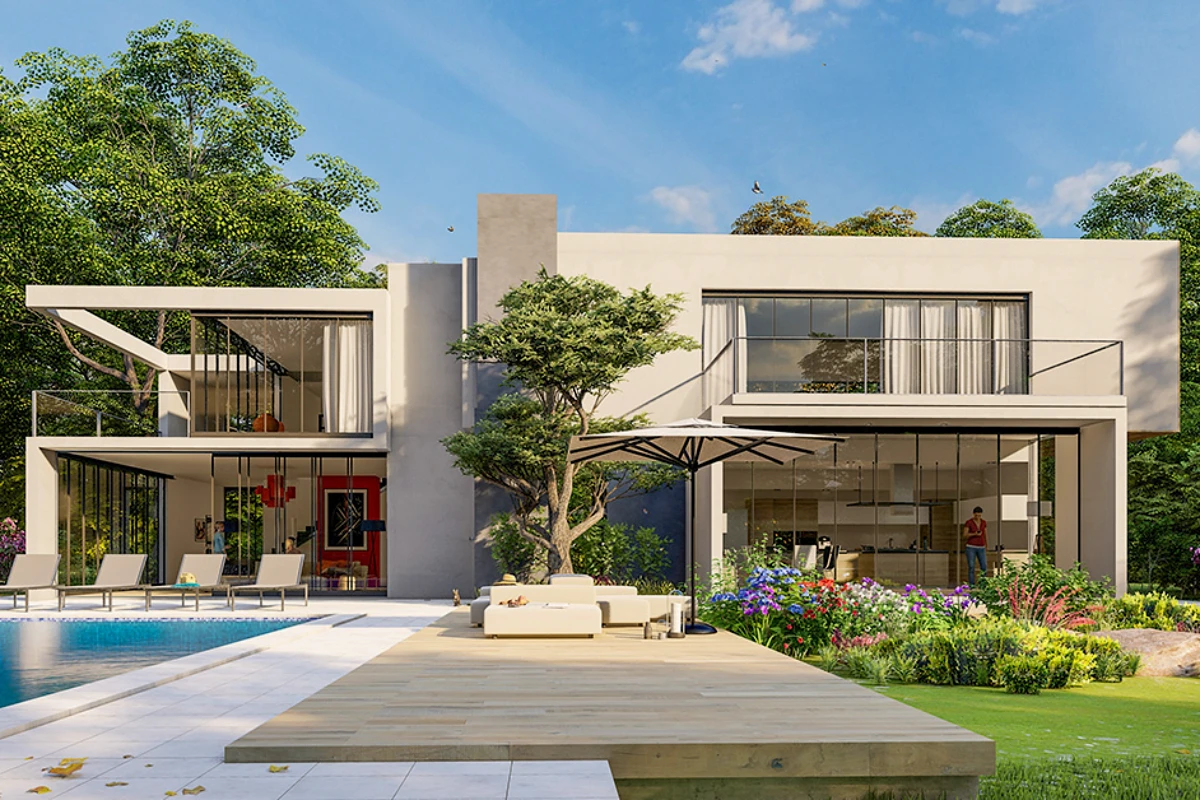
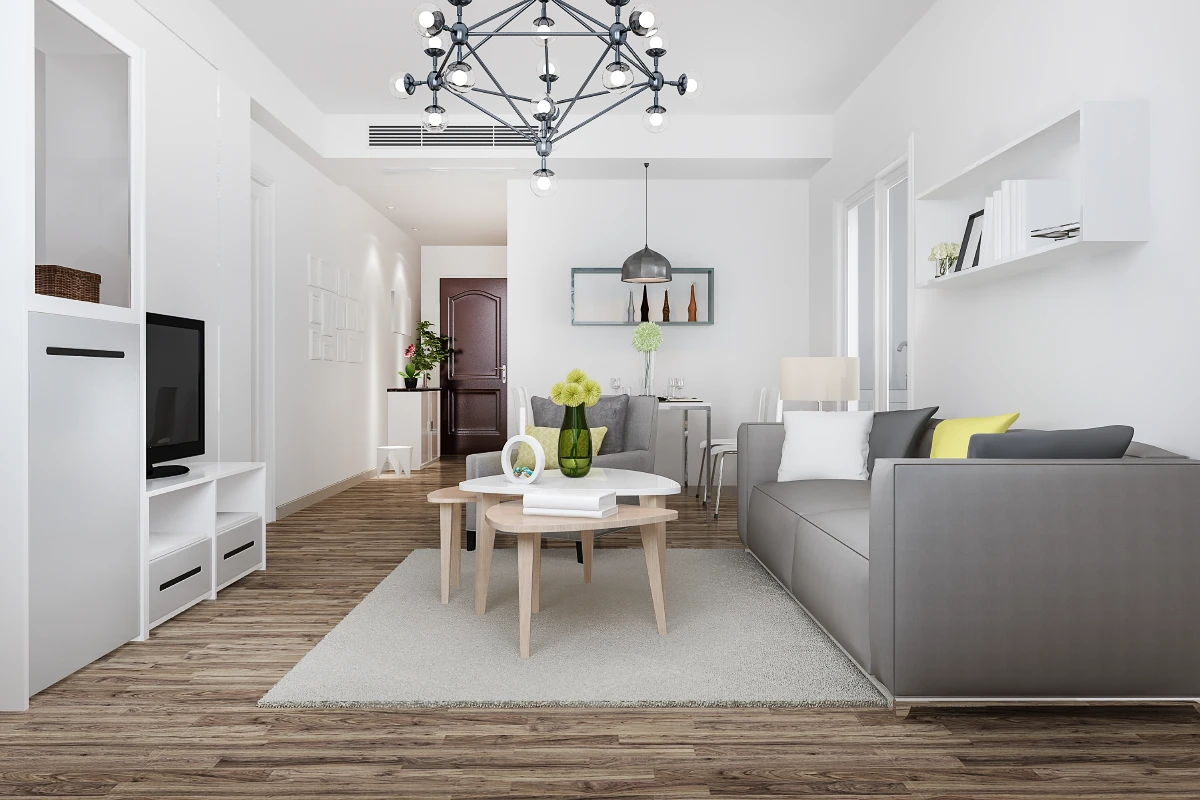
Energy-efficient properties in Spain – how much will you really save on your bills?
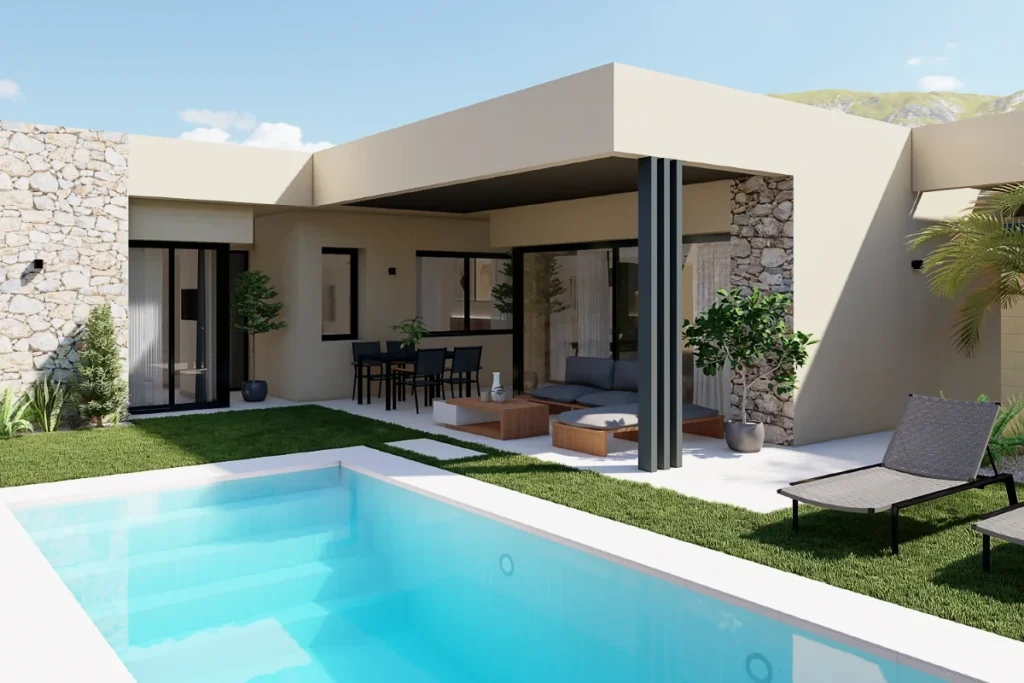

When buying a new apartment or villa on the Costa Blanca or Costa del Sol today, you don’t have to wonder whether the property is energy-efficient — you can be sure it is. Energy efficiency is no longer a premium option you pay extra for. Since 31 December 2020, it has been a legal obligation for every developer in Spain. This means that every new building whose project was submitted after that date must meet the NZEB standard — a nearly zero-energy building. In this article, we explain what this specifically means for the buyer: what energy-efficient homes look like and how they work, why they are built this way, and what sets new construction apart from old apartments.
Why must new homes in Spain be energy-efficient?
The answer is simple: the law requires it. The EU’s EPBD (Energy Performance of Buildings Directive) and the Spanish Technical Building Code (Código Técnico de la Edificación, or CTE) that implements it mean that energy efficiency is no longer a developer’s choice but a mandatory condition for obtaining a building permit.
Behind these regulations lies hard data: buildings account for approximately 40% of total energy consumption in the European Union and generate over 36% of energy-related greenhouse gas emissions. At the same time, over 80% of existing buildings in Spain receive an energy certificate of class E, F, or G — the lowest possible efficiency level. The new legislation aims to reverse this trend, starting with what is being built today.
But regulations are not the only motivation. Rising electricity prices mean that buyers are increasingly aware of property running costs. In sunny Andalusia and on the Costa Blanca, where summer lasts several months and air conditioning works intensively, the difference in bills between a new and an old building can amount to several hundred euros per year. For a holiday apartment owner or an investor renting out property — this is an argument that cannot be ignored.
Did you know…? NZEB energy-efficient buildings can reduce non-renewable primary energy consumption by more than 46% compared to the previous building standard. In the climate of the Costa del Sol and Costa Blanca, where the sun shines over 300 days a year, photovoltaic systems built into new developments as standard can cover a significant portion of this energy demand from their own resources.
The NZEB standard — what does it mean in practice?
NZEB, or Nearly Zero-Energy Building, is a building designed so that its energy demand is minimal, and the small amount it needs comes as much as possible from renewable sources. It is not about a single element — it is a set of solutions that together form a coherent system. Since 31 December 2020, every new residential building in Spain must meet this standard.
In 2030, the bar will be raised even higher: the ZEB (Zero Emission Building) standard will come into effect, requiring zero CO₂ emissions from fossil fuels on site. Many modern developers operating on the Costa Blanca and Costa del Sol are already building closer to this standard — not only because the law demands it, but because discerning buyers from Western Europe and Scandinavia expect it. A detailed timeline of regulations and implementation dates can be found in our article on energy efficiency in Spain.
Energy efficiency in Spain: What you need to know as a property owner
Full timeline of EU and Spanish energy regulations — dates, requirements, and what they mean for property owners.
What does an energy-efficient home in Spain look like? Technologies and solutions
A modern apartment on the Costa Blanca or a villa on the Costa del Sol is a completely different building from one built 20 years ago — even if it looks similar from the outside. The difference lies in what is invisible: in the walls, installations, and systems that together make the home consume drastically less energy while providing a higher level of living comfort.
Thermal insulation — the foundation of everything
Every energy-efficient building starts with an envelope that does not let heat pass where it should not. New homes and apartments in Spain use high-quality insulating materials — mineral wool, graphite polystyrene, or polyurethane foam — with parameters that far exceed former building standards. Windows are typically double- or triple-glazed with argon filling and thermally broken frames, which virtually eliminate energy losses through glazing. The effect is immediately noticeable: in summer, the interior stays cool without the air conditioning running constantly; in winter, heat does not escape outside.
Aerothermal energy — the heart of the modern home
The traditional gas boiler is a relic of the past in new construction. Its place has been taken by aerothermal systems — air-to-water heat pumps that extract thermal energy from the outdoor air and convert it into heating, cooling, and domestic hot water using a single unit. For every 1 kWh of electricity consumed, they deliver 3 to 5 kWh of thermal or cooling energy.
This solution is exceptionally well suited to the Mediterranean climate. In Andalusia and on the Costa Blanca, temperatures almost never drop below zero — aerothermal systems operate at maximum efficiency all year round. In summer, the same system handles room cooling, eliminating the need for a separate air conditioning unit. Underfloor heating powered by aerothermal energy is also becoming standard — quiet, even, and exceptionally economical.
Photovoltaics — your own power station on the roof
Photovoltaic panels are now an almost mandatory element of new developments and villas in Spain. A rooftop installation or panels on the building’s communal elements allow electricity to be produced directly from sunlight — for free, silently, and without emissions. Spain averages over 3,000 hours of sunshine per year, and the Costa del Sol and Costa Blanca are among the best locations in all of Europe in this regard. This means that a photovoltaic installation here works far more intensively than in Germany, Poland, or the United Kingdom — and the return on investment is significantly shorter.
Mechanical ventilation with heat recovery
A well-insulated building needs to breathe — but in a controlled way. Mechanical ventilation systems with heat recovery extract heat or coolness from the exhausted air and transfer it to the fresh air drawn in from outside. This means residents constantly breathe filtered, fresh air without losing the energy invested in heating or cooling it. This is particularly important in areas with high levels of dust or in homes near the beach, where ventilating through open windows can be inconvenient.
Smart building management systems
Modern properties on the Costa Blanca and Costa del Sol are increasingly equipped with home automation systems: smart thermostats that learn residents’ habits, external blinds and shutters that react automatically to sunlight exposure, and LED lighting controlled by presence sensors. The EPBD 2024 directive mandates the installation of energy management systems in new buildings — this is now a standard, not an option.
Electric vehicle infrastructure
New building regulations in Spain require that new residential buildings be equipped with electric vehicle charging infrastructure or at least with pre-installed wiring ready for its installation. In modern developments on the Costa Blanca and Costa del Sol, charging points in underground garages are already standard — yet another element that sets new construction apart from the secondary market.
What to look for when buying a new property in Spain
- Check whether the building project was submitted after 31 December 2020 — only then does the full NZEB standard apply and class A is guaranteed by regulation.
- Ask the developer for the project’s energy certificate before signing the reservation agreement — you are fully entitled to this.
- Ask about the type of heating and cooling system — aerothermal energy is today’s gold standard; the presence of a gas boiler should raise a red flag.
- Find out whether the development has a photovoltaic installation and whether solar energy costs are included in the community fees.
- Ask about the insulation parameters of walls and windows (U-value, or thermal transmittance coefficient) — the lower, the better the building.
- Make sure that upon key handover you receive the completed building certificate (certificado de obra terminada) — this is the document with legal force for any future resale.
Energy certificate in new construction — what do you get from the developer?
When buying a property from the primary market on the Costa Blanca or Costa del Sol, you do not need to worry about arranging an energy certificate — this is the developer’s obligation. Moreover, new construction requires two separate documents: a project certificate, issued before construction begins, and a completed building certificate, prepared after the development is handed over for use. The developer must provide you with both at the time of signing the notarial deed.
The certificate assigns the building an energy class on a scale from A (best) to G (worst). New buildings meeting the NZEB standard practically receive class A. The certificate is valid for 10 years from the date of registration — with the exception of properties in class G, for which the validity period is shortened to 5 years. Everything you need to know about the energy certificate when buying and selling property in Spain can be found in our dedicated guide.
Energy certificate (CEE) for property sales in Spain — a complete guide
What is a CEE, who issues it, how much does it cost, how long is it valid, and what penalties apply for not having one — everything in one place.
New vs. old construction — the real difference for the owner
The comparison between a new and an old property is best seen in everyday costs. The owner of a 1990s apartment on the Costa del Sol, equipped with old windows, no insulation, and split air conditioning, pays summer electricity bills amounting to hundreds of euros per month. The owner of a new apartment in the same region — with aerothermal energy, photovoltaics, and good insulation — often keeps costs within a few dozen euros, and in months with intense sunshine, panel production covers current consumption almost entirely.
The table below shows estimated monthly and annual running costs for an apartment of approximately 80 m² on the Costa Blanca or Costa del Sol — depending on the building’s energy standard. The values are approximate and may vary depending on residents’ habits, location, and current energy tariffs.
| Cost category | Old apartment (class E–G, pre-2000) | New NZEB apartment (class A, post-2021) |
|---|---|---|
| Electricity and air conditioning (monthly) | €80–130 (summer) / €50–80 (winter) | €30–50 (summer) / €20–35 (winter) |
| Heating and hot water (monthly) | included in electricity or gas: +€20–40 | included in electricity (aerothermal): no surcharge |
| Total energy costs (annually) | approx. €1,100–2,000 | approx. €350–700 |
| Estimated annual savings | — | approx. €700–1,300 per year |
| Energy class | E, F, or G | A |
| Impact on market value | Baseline value | +9–10% according to Banco de España |
| Access to green mortgage | No | Yes (hipoteca verde) |
Did you know…? With annual savings of around €1,000, the difference in energy costs between an old and a new apartment over 10 years of ownership amounts to as much as €10,000 — and that is at current energy prices, which may rise. The values in the table are approximate and may vary depending on residents’ habits, energy tariffs, and property usage time.
This directly translates into market value. According to Banco de España data, properties with class A or B are valued 9–10% higher than comparable properties with class F or G. On the Costa Blanca and Costa del Sol, where the market is largely driven by buyers from Northern Europe — accustomed to high energy standards and aware of running costs — this difference is particularly pronounced. An energy-efficient property sells faster, is easier to rent out, and may qualify for so-called green mortgages (hipotecas verdes) with more favourable interest rates.
Did you know…? Properties with an energy certificate of class A or B are rented out for an average of 4–8% more than comparable units with lower classes. For an investor purchasing an apartment for rental on the Costa Blanca or Costa del Sol, this means a tangible increase in return on investment — year after year, without any additional effort.
Which buildings in Spain require modernisation?
Energy efficiency is the standard in new construction — but what about the millions of apartments and houses built before 2020? Over 80% of existing buildings in Spain receive an energy class of E, F, or G. These are buildings constructed without today’s standards: without proper insulation, with gas heaters, and single-pane windows. This segment of the market faces the need for modernisation.
The EPBD 2024 directive imposes on member states the obligation to gradually renovate the worst-performing buildings in terms of energy — both residential and commercial. Owners of older properties who plan to rent or resell should follow the evolving regulations and consider modernisation: wall insulation, window replacement, replacing the gas boiler with an aerothermal system, and installing photovoltaic panels. The European Union provides substantial funding for this purpose. However, it is worth remembering that investing in a thorough renovation of an old building can be costly — and does not always achieve the same result as purchasing a new, ready-made property.
Frequently asked questions (FAQ)
What is the NZEB standard and do all new homes in Spain meet it?
Answer: NZEB (Nearly Zero-Energy Building) is a nearly zero-energy building standard, mandatory in Spain for all new buildings whose projects were submitted after 31 December 2020. It means minimal energy demand and covering it as much as possible from renewable sources. In practice, new developments on the Costa Blanca and Costa del Sol completed since 2021 meet this standard and achieve energy class A. Note: projects submitted before this date — even if construction took longer — may result in lower classes (B, C, or even D).
What energy-efficient technologies are standard in new buildings in Spain?
Answer: New construction in Spain combines several key solutions: aerothermal energy (air-to-water heat pump) providing heating, cooling, and hot water; photovoltaic panels generating electricity from the sun; high-quality thermal insulation of walls and roofs; multi-pane window joinery; mechanical ventilation with heat recovery; and smart energy management systems. On the Costa Blanca and Costa del Sol, thanks to exceptional sunshine levels, photovoltaics and aerothermal systems operate with particularly high efficiency.
What energy class does a new apartment from a developer in Spain have?
Answer: New developments based on projects submitted after 31 December 2020 must meet the NZEB standard, which in practice corresponds to energy class A. The developer is required to provide two certificates: a project certificate (before construction) and a completed building certificate (after handover). The latter is the document that has legal force for any future resale of the property — it is worth ensuring you receive it at key handover.
How much can you save on energy bills in an energy-efficient home?
Answer: NZEB buildings can reduce non-renewable primary energy consumption by more than 46% compared to the previous building standard, and compared to the oldest buildings, savings reach 80–90%. In the conditions of the Costa Blanca and Costa del Sol, where the main energy cost is air conditioning, a well-insulated home with aerothermal energy and photovoltaics can reduce bills from several hundred euros per month to a few dozen — and in months with high sunshine, the energy balance can be close to zero.
Which old buildings in Spain will need to undergo energy modernisation?
Answer: The EPBD 2024 directive obliges Spain to gradually modernise existing buildings with the worst energy performance — primarily those in classes E, F, and G, which account for over 80% of the entire building stock in the country. This applies to public and private buildings, residential and commercial alike. The pace and scope of modernisation are gradual: requirements for public buildings come into force earlier, while private owners have more time. The EU provides funding programmes for this work, and Spain is required to develop a national building renovation plan.
Does aerothermal energy work well in Spain’s warm climate?
Answer: Yes — and this is one of the best environments for this technology. An air-to-water heat pump extracts energy from the outdoor air, so it works most efficiently where temperatures rarely drop below zero — exactly as on the Costa Blanca and Costa del Sol. In the Mediterranean climate, aerothermal systems deliver 3 to 5 kWh of energy for every 1 kWh of electricity consumed, all year round. In summer, the same system cools the building, replacing a separate air conditioning unit.
Is a new energy-efficient property easier to sell or rent out?
Answer: Yes — and market data confirms this. According to Banco de España, properties of class A or B are valued 9–10% higher than comparable properties in class F or G, and rental rates for classes A–C are 4–8% higher. Buyers from Western Europe and Scandinavia — who make up a significant portion of the market on the Costa Blanca and Costa del Sol — increasingly treat the energy class as one of the main selection criteria. An energy-efficient property also qualifies for so-called hipotecas verdes, or green mortgages with more favourable interest rates, which broadens the pool of potential buyers.
Energy-efficient properties on the Spanish market
Energy efficiency in new construction in Spain is not a trend — it is current law and an everyday reality of the property market. Every new apartment and every villa on the Costa Blanca and Costa del Sol built since 2021 is a class A building: with aerothermal energy instead of a gas boiler, photovoltaic panels on the roof, thick thermal insulation, airtight multi-pane windows, and smart energy management systems. These are buildings whose electricity bills are a fraction of what owners of older properties pay — and whose market value is, and will continue to be, higher.
If you are considering buying property in Spain, energy efficiency should be one of the first questions you ask — not because it is fashionable, but because it translates into real money: lower running costs every year, a higher price in the event of resale, and better rental terms.
Informacje o autorze
Your dream home in Spain awaits!
Arrange a free, no-obligation consultation. Leave your details.
Our experts will explain the entire process to you and answer any questions you may have.
Trust our experience. Over 200 properties sold. Licensed agents. Positive reviews and comprehensive services.
New properties
Other entries in this category
Changes to tourist licences in Spain 2026
The year 2025 brought groundbreaking changes regarding tourist licences in Spain, affecting both current tourist licence holders and those planning…
Author: Katarzyna Szulc
Why Costa Blanca in 2026 is better than Warsaw —
A Polish investor today faces a strategic dilemma: buy another apartment in Warsaw at 16,000–18,000 PLN per square metre, or…
Author: Katarzyna Szulc
Short-term rentals in Poland – what is changing and what
Just a few years ago, renting out an apartment by the night through Airbnb or Booking seemed like one of…
Author: Katarzyna Szulc