Administrative division of Spain: regions and autonomous communities
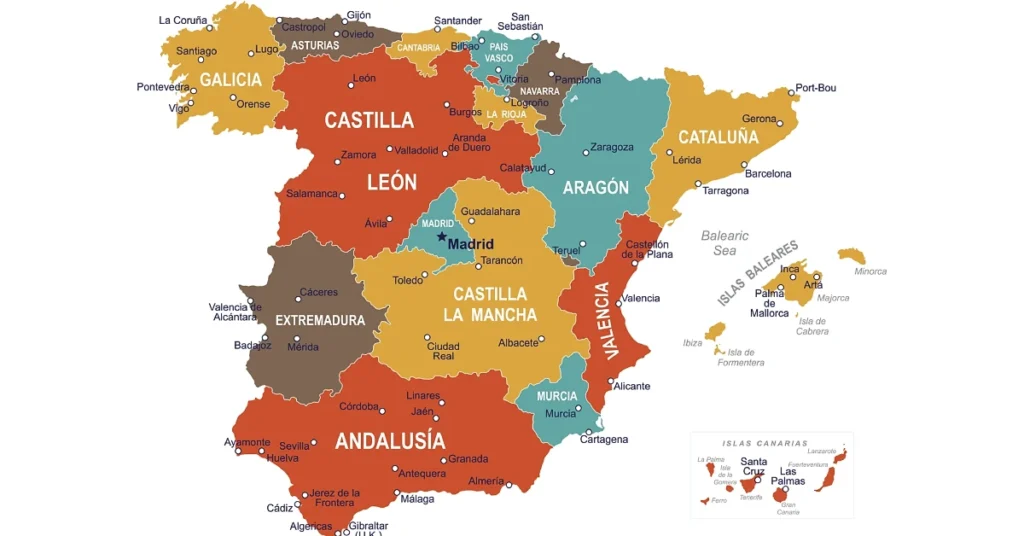

Spain is a country with a complex administrative division system that plays a key role in organizing both public life and state governance. The administrative structure consists of three main levels: autonomous communities, provinces, and municipalities. Through this system, Spain ensures appropriate decentralization of power, aimed at meeting the needs of diverse regions both culturally and economically.
Autonomous Communities: The Foundation of the Spanish System
This is the most important territorial division unit in Spain, which provides regions with broad autonomy. Spain consists of 17 autonomous communities (Comunidades Autónomas) and 2 autonomous cities (Ceuta and Melilla), which have their own parliaments and governments. Each community has a separate statute that defines the scope of its competencies and method of governance. This territorial division was introduced after the fall of dictatorship in 1975 and has been evolving ever since.
These units can independently decide on many areas, such as education, healthcare, transport, as well as local law and taxes. This is particularly important for regions with strong cultural and historical traditions, such as Catalonia, the Basque Country, or Galicia.
Key Autonomous Communities
- Catalonia – One of the most well-known regions of Spain, famous for its rich history, culture, and Catalan language, which is an official language. Catalonia, with Barcelona as its capital, has broad autonomy, which has repeatedly led to disputes with the central government. In 2017, there were high-profile attempts to declare independence by this region, which attracted international attention.
- Andalusia – The largest community in terms of area, characterized by a warm climate and rich culture. It is a region with some of the most beautiful cities in Spain, such as Seville and Granada, which attract millions of tourists annually.
- Basque Country – A region that enjoys the highest level of independence in Spain, with its own language and culture. Bilbao and San Sebastián are some of the key cities in this region, known for innovation and high quality of life.
- Madrid – The capital of Spain is Madrid, which serves both administrative and political functions, being one of the country’s most important economic centers.
- Galicia – Known for its harsh climate and deep traditions, Galicia is an area in northwestern Spain. Its capital, Santiago de Compostela, is the destination of numerous pilgrimages from around the world.
Autonomy of Island Regions
Spain also consists of island regions that also enjoy broad independence. These include the Canary Islands and the Balearic Islands. Both archipelagos are popular vacation destinations due to their exceptional climate and attractive landscapes.
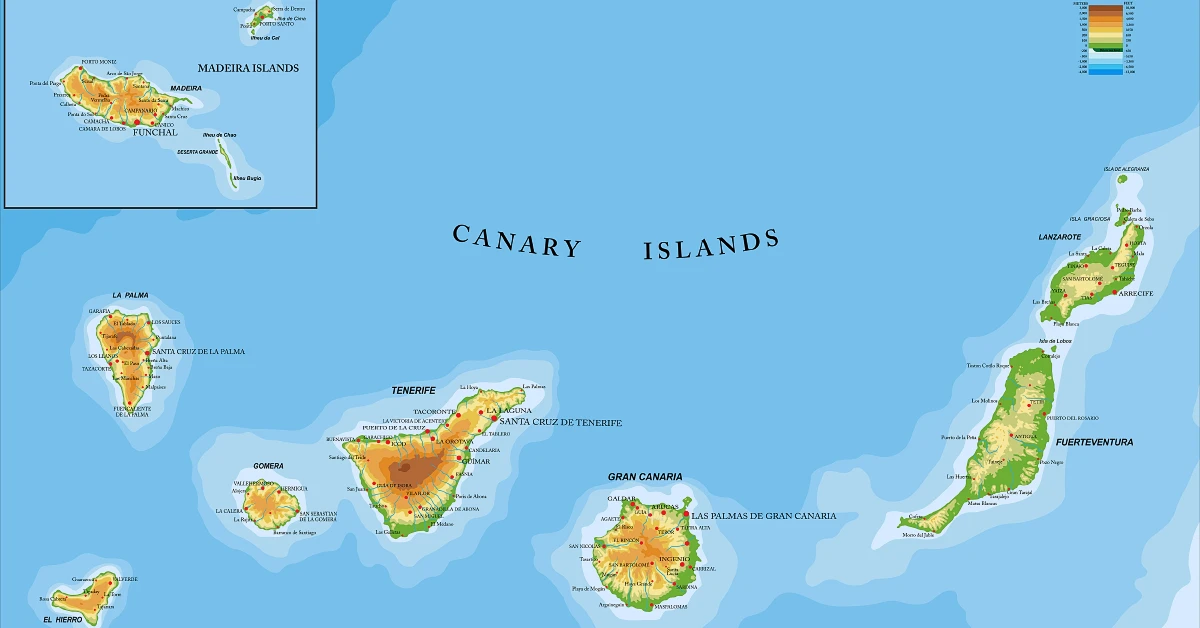
- Canary Islands – Composed of seven main islands, including Tenerife and Gran Canaria, the Canaries are one of the most important vacation centers in Spain, with an economy strongly linked to tourism and agriculture.
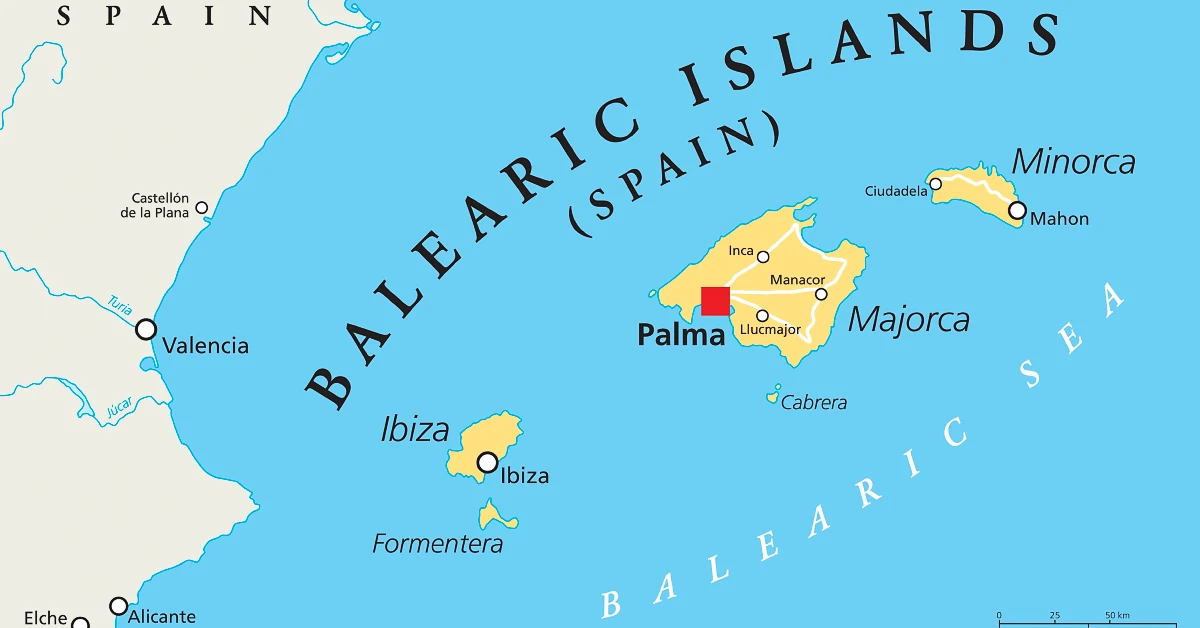
- Balearic Islands – Islands located in the Mediterranean Sea, with the capital on the island of Palma de Mallorca, also attract millions of tourists every year, thanks to beautiful beaches and warm climate.
Other Independent Communities:
- Aragon (Aragón) – capital Zaragoza
- Asturias (Asturias) – capital Oviedo
- Extremadura (Extremadura) – capital Mérida
- Cantabria (Cantabria) – capital Santander
- Castile-La Mancha (Castilla La Mancha) – capital Toledo, Albacete
- Castile and León (Castilla y León) – capital Valladolid, Burgos (court), León
- La Rioja (La Rioja) – capital Logroño
- Murcia (Murcia) – capital Murcia, Cartagena (parliament)
- Navarre (Navarra, Basque Nafarroa) – capital Pamplona
- Valencia (Valencia, Catalan València) – capital Valencia
Provinces – The Second Level of Territorial Division
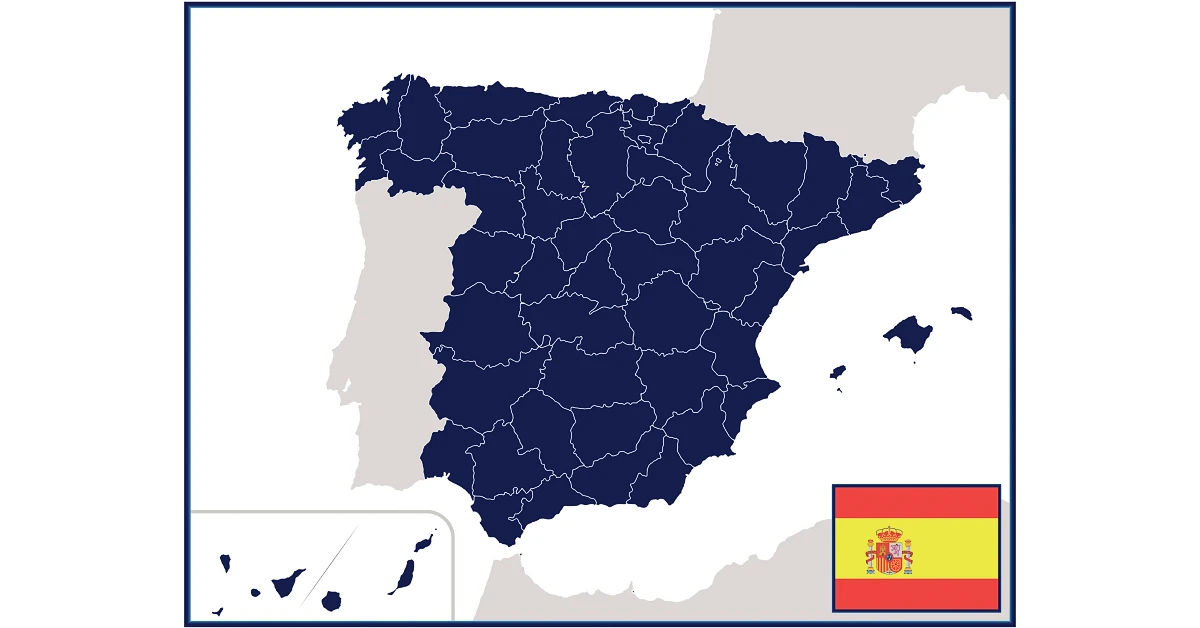
Autonomous communities are divided into provinces, which constitute the second level of administration. In Spain, there are a total of 50 provinces, each of which performs both local and regional functions. Each province has its own council, responsible for coordinating activities between municipalities and implementing tasks assigned by the central government.
Functions of Provinces in Spain
Provinces are responsible for a range of tasks, such as supervision of infrastructure, transport, environmental protection, and spatial planning. They also perform administrative functions related to maintaining public order, and their representative is the governor, who is responsible for law enforcement at the regional level.
Important provinces, such as the Province of Madrid, Province of Seville, Province of Murcia, or Province of Valencia, play a key role in the country’s economy, attracting both investments and tourists.
Municipalities – The Basic Administrative Level
Municipalities constitute the third, lowest level of Spain’s territorial division. Currently, there are over 8,000 municipalities (municipios) in Spain, which manage local affairs. They have full legal personality, and their authorities are the alcalde (mayor) and the municipal council, elected by residents every four years.
Functions of the Unit
Their tasks include managing issues such as water supply, waste disposal, local education, public safety, and road infrastructure. Those with a larger population must also provide additional services, such as public transport or healthcare.
Diversity of Municipalities in Spain
In Spain, there is great diversity among municipalities, both in terms of size and the tasks they perform. The largest ones, such as Madrid, Barcelona, or Valencia, must provide extensive infrastructure and public services for millions of residents. Meanwhile, smaller ones, especially in rural regions, focus on providing basic services to the local community.
Political System of Spain
The administrative division of the country operates within the framework of a parliamentary monarchy, headed by King Felipe VI. Although the role of the monarch is mainly symbolic, the king plays an important function in maintaining the unity of the country, especially in the face of separatist movements in regions such as Catalonia.
Executive power is exercised by the government, headed by the prime minister, currently Pedro Sánchez, elected in democratic elections.
Spain has been a member of the European Union (then the European Economic Community) since January 1, 1986. Consequently, it actively participates in the European integration process, which affects regional development through access to EU funds.
Furthermore, Spain belongs to many international organizations such as: UN, NATO, OSCE, WTO, OEI, and the Latin Union.
Impact of Administrative Division on Tourism
Spain’s administrative division has a direct impact on the development of the tourism sector, which is one of the key sectors of the country’s economy. Each part of Spain attracts many vacationers with its unique attractions, from architecture and culture to nature and landscapes.
Most Popular Tourist Regions
- Catalonia – Barcelona, the capital of the region, attracts millions of tourists annually, both for its monuments and dynamic cultural life.
- Andalusia – With beautiful Costa del Sol beaches, monuments in Seville and Granada, and excellent cuisine, Andalusia is one of the favorite places among foreigners.
- Canary Islands – Thanks to the mild climate throughout the year, the Canaries are an excellent vacation spot, especially in winter, when the rest of Europe struggles with cold weather.
- Balearic Islands – Ibiza and Mallorca are islands known for mass tourism, but also luxury tourism, attracting both young tourists and families with children.
Tourism has a significant impact on the local economy of autonomous regions, and the diversity of landscapes and climates in Spain makes this country attractive to visitors with different preferences.
Administrative Division in Spain – Key Information
Spain’s administrative division plays a key role in ensuring efficient governance of the country, taking into account its cultural and geographical diversity. 17 autonomous communities, 50 provinces, and thousands of municipalities guarantee that each region has the ability to independently decide on the most important local issues, while maintaining state unity.
Decentralization of power in Spain also promotes the development of the tourism sector, which is one of the pillars of the Spanish economy. Valuable cultural heritage, diverse landscapes, and the richness of regional traditions make Spain a country with exceptional dynamics both politically and socio-economically.
Informacje o autorze
Z wykształcenia licencjonowana księgowa i kryminolożka, z pasji – ekspertka od hiszpańskiego rynku nieruchomości. Moje nietypowe połączenie umiejętności analitycznych, dociekliwości i znajomości przepisów finansowych pozwalają mi oferować klientom spojrzenie na zakup z szerokiej perspektywy. Specjalizuję się w kompleksowej obsłudze transakcji, dbając o bezpieczeństwo prawne i finansowe każdej inwestycji. Prywatnie miłośniczka hiszpańskiej kultury i kuchni, zawodowo – Twoja przewodniczka w drodze do wymarzonego domu pod słońcem Hiszpanii.
Your dream home in Spain awaits!
Arrange a free, no-obligation consultation. Leave your details.
Our experts will explain the entire process to you and answer any questions you may have.
Trust our experience. Over 200 properties sold. Licensed agents. Positive reviews and comprehensive services.
New properties
Other entries in this category
Easter in Spain? When is Holy Week in 2025?
Discover Holy Week in Spain - Easter 2025 One of Spain's most eagerly awaited celebrations is steeped in religious significance…
Author: Katarzyna Szulc
The best places to ski in Spain: TOP 7 ski
Planujesz wyjazd na narty w Hiszpanii? Odkryj najlepsze miejsca na stoki narciarskie, w tym popularny ośrodek Formigal i inne wyjątkowe…
Author: Go Spain
Castle of Saint Barbara in Alicante – Castillo de Santa
The Castle of Santa Bárbara in Alicante, located at the top of Mount Benacantil, is one of the largest medieval…
Author: Karolina Pazik