Easter in Spain? When is Holy Week in 2025?

Discover Holy Week in Spain – Easter 2025
One of Spain’s most eagerly awaited celebrations is steeped in religious significance and cultural richness. Holy Week, or Semana Santa, transforms cities and towns into living canvases of tradition, drawing thousands of visitors into its deeply emotional space.
Holy Week in 2025
Mark your calendar for April 13-20, 2025. This sacred period begins on Palm Sunday and ends on Easter Sunday, creating a tapestry of historical and spiritual experiences in Spanish communities.
Key dates to remember
Here is a detailed breakdown of the significant days during Holy Week 2025:
- April 13: Palm Sunday
- April 14: Holy Monday
- April 15: Holy Tuesday
- April 16: Holy Wednesday
- April 17: Holy Thursday
- April 18: Good Friday
- April 19: Holy Saturday
- April 20: Easter Sunday
- April 21: Easter Monday
Palm Sunday – Ceremonial inauguration
Imagine churches bustling with activity and devotion. On April 13, 2025, Christian denominations commemorate Jesus’ triumphal entry into Jerusalem. Olive and palm branches are blessed and distributed, symbolizing the crowds that welcomed Jesus.
The faithful carefully store these blessed branches, hanging them near Christian artwork or hiding them in their personal prayer books. There is a beautiful ritualism to this—the same palms will be burned on Shrove Tuesday next year, and their ashes will be used on Ash Wednesday, marking the beginning of Lent.
Holy Thursday – Processions and deep traditions
April 17, 2025 marks Holy Thursday (Jueves Santo), commemorating the Last Supper. This day is celebrated in a very spectacular manner and has a rich religious tradition.
Church services
Holy Thursday begins with the Chrism Mass in the cathedral, attended by the bishop and priests from across the diocese. During the ceremony:
- The oils of the sick and catechumens are blessed
- The consecration of chrism is performed
- Priests renew their priestly vows
In the evening, a solemn Mass of the Lord’s Supper is celebrated, symbolizing Jesus’ Last Supper with his disciples. A characteristic element is the symbolic washing of the feet of twelve men by the priest.
Processions
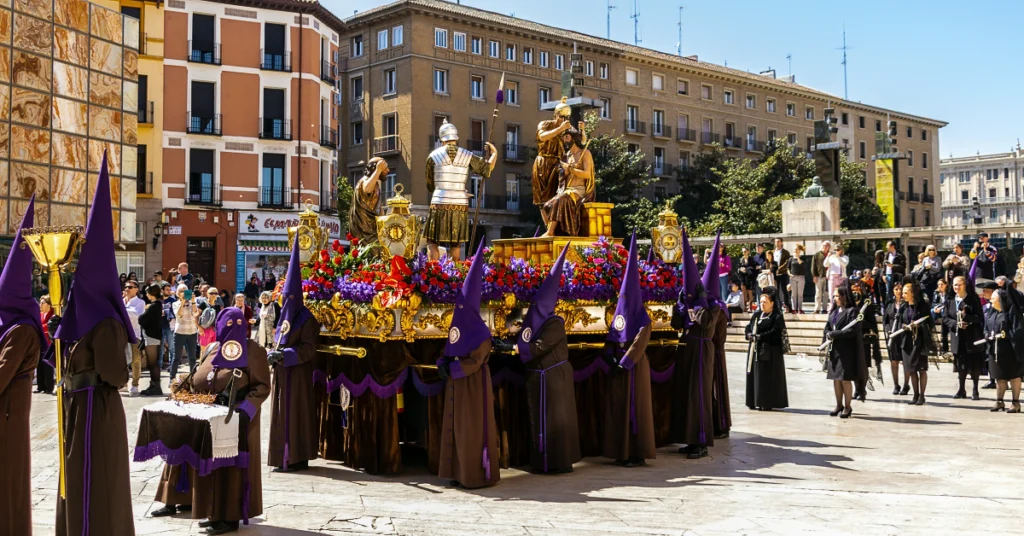
Unusual processions (Paso) take place on the streets of many Spanish cities:
- Brotherhoods in cloaks and hoods carry crosses and platforms with figures of Jesus.
- Some participants walk barefoot, dragging chains behind them as an expression of penance.
- The processions are usually silent, interrupted only by the beating of drums.
The most famous processions take place in:
- Seville (over 60 brotherhoods)
- Murcia
- Valladolid
- Cuenca
- Ferrol
- Salamanca
- Málaga
- Granada
The Madrugá in Seville, which begins after midnight, is particularly spectacular, with successive brotherhoods carrying figures depicting scenes from the Passion of Christ.
Good Friday – A day of deep reflection
April 8, 2025, is a key moment in Semana Santa, characterized by extraordinary solemnity and spiritual focus. Good Friday in Spain is much more than just a national holiday—it is a day of complete social transformation, when the entire community unites in mourning and contemplation of the crucifixion of Jesus Christ.
The spiritual dimension of the day
For Spanish Catholics, Good Friday is a time of intense spiritual meditation. On this day:
- Churches are decorated in black, symbolizing mourning.
- Altars are uncovered and stripped of decorations.
- The liturgy focuses on the reading of the Passion of Christ.
- The faithful participate in the adoration of the cross—the most important moment of the day.
Traditions of penance and fasting
Catholics observe strict fasting traditions:
- Complete abstinence from meat
- Limiting meals to one full meal and two light meals
- Practicing fasting as a form of spiritual purification
- Prayers and reflections on the suffering of Christ
Good Friday processions
The processions on this day are completely unique:
- They are characterized by extraordinary solemnity and silence.
- Participants wear traditional brotherhood costumes (nazarenos).
- Heavy platforms (pasos) with figures of Christ are an almost intangible expression of pain.
- The music is usually mournful marches or complete silence.
The most famous processions
Particularly noteworthy are the processions in:
- Seville
- Valladolid
- Cuenca
- Granada
- Murcia
Each of these cities has its own unique tradition of expressing mourning and spiritual suffering.
Easter Sunday – Celebration of the Resurrection
April 20, 2025, is the complete opposite of the somber Good Friday. Easter Sunday in Spain is a true explosion of joy, life, and hope that completely transforms the atmosphere of cities.
The symbolism of resurrection
Everything changes on this day:
- Churches are decorated in white and gold colors.
- The liturgy is full of hymns and joyful songs.
- The faithful greet each other with the words “Christ is risen!”
- The processions are completely different in character—they are full of light and music.
Easter family traditions
Easter Sunday is also a time for family gatherings:
- A big communal breakfast
- Exchange of gifts
- Celebration of life and hope
- Traditional regional dishes
Seville stands out on this day – processions transform from mournful to triumphant, and the city bursts with joy and hope for new life.
Easter in Spain is more than just a religious holiday – it is a true journey through deep emotional states, from the deepest mourning to the highest joy, reflecting the fundamental human experiences of faith, suffering, and redemption.
Easter Monday – Regional celebrations
Although not widely celebrated, regions such as Catalonia, the Balearic Islands, and the Basque Country embrace this day. Children receive traditional Easter pastries called “Mona” from their godparents, and families gather to prepare regional delicacies.
Every moment of Holy Week tells a story—one of faith, tradition, and community. Whether you are a spiritual traveler or a culture enthusiast, Holy Week in Spain offers an unparalleled opportunity to experience living history.
Regional faces of Holy Week – Diversity of traditions in Spain
Holy Week in Spain is not just a uniform celebration, but a mosaic of regional customs that give the celebrations in different autonomous communities their unique character.
Andalusia: The cradle of the most intense processions
Andalusia, and especially cities such as Seville, Málaga, and Granada, are the center of Easter celebrations. They are characterized by:
- The most numerous brotherhoods (cofradías)
- Spectacular processions often lasting several hours
- An extremely emotional atmosphere, where the faithful in traditional costumes carry heavy platforms with figures of saints
Seville – A festival of cultural heritage
In Seville, Easter is not only a religious event, but a true cultural celebration. The city is completely transformed:
- Over 60 brotherhoods organize processions
- Seville’s Madrugá (midnight procession) is listed as UNESCO Intangible Cultural Heritage
- Thousands of tourists come especially to see these unique celebrations
Castile and León: Gravity and asceticism
In regions such as Valladolid and Zamora, the atmosphere is completely different:
- The processions are characterized by greater solemnity and austerity
- Participants often walk barefoot or in heavy chains as a form of penance
- Dark, penitential colors predominate: black and purple
Catalonia: Easter with its own character
In Catalonia, Holy Week is linked to local traditions:
- Children receive traditional “Mona de Pascua” pastries
- The processions are more local and intimate in nature
- The influence of Catalan culture is more noticeable
Practical information for travelers
Dates and planning
- Holy Week in 2025: April 13-20
- Approximately 250 cities organize official processions
- It is advisable to book accommodation at least 6 months in advance
Tips for tourists
- Reservations:
- Book apartments/hotels well in advance
- Check local event calendars
- Reserve tickets for processions in the most popular cities
- Clothing:
- Dress appropriately for the solemnity of the holiday
- Be prepared for changing weather conditions
- Comfortable footwear is essential during long processions
- Transport:
- Check local traffic restrictions
- Use public transportation
- Be aware of changes to timetables
Costs and budget
- Accommodation prices increase by 30-50% during Holy Week
- Tickets for some processions are subject to a fee
- Anticipate additional expenses related to local traditions
Easter, law, and administration in Spain
Public holidays and national holidays
- Good Friday is an official public holiday.
- Easter Monday is a public holiday only in some regions.
- It is worth checking local regulations regarding work and services.
Traveling during Easter
- Airports and train stations are very crowded.
- Book your tickets well in advance.
- Expect delays in transportation.
Easter culinary specialties
Traditional dishes
- Torrijas – sweet bread soaked in milk and eggs
- Potaje de Vigilia – fish soup for Lent
- Mona de Pascua – sweet Easter cake
- Various regional desserts and pastries
Semana Santa – A journey through the heart of Spanish tradition
Easter in Spain is not only a religious event, but a true celebration of culture, tradition, and community. Each region offers a unique perspective on these special days.
Whether you are a tourist interested in culture or a pilgrim on a spiritual journey, Holy Week in Spain is sure to provide an unforgettable experience.
Informacje o autorze
Your dream home in Spain awaits!
Arrange a free, no-obligation consultation. Leave your details.
Our experts will explain the entire process to you and answer any questions you may have.
Trust our experience. Over 200 properties sold. Licensed agents. Positive reviews and comprehensive services.
New properties
Other entries in this category
The best places to ski in Spain: TOP 7 ski
Planujesz wyjazd na narty w Hiszpanii? Odkryj najlepsze miejsca na stoki narciarskie, w tym popularny ośrodek Formigal i inne wyjątkowe…
Author: Go Spain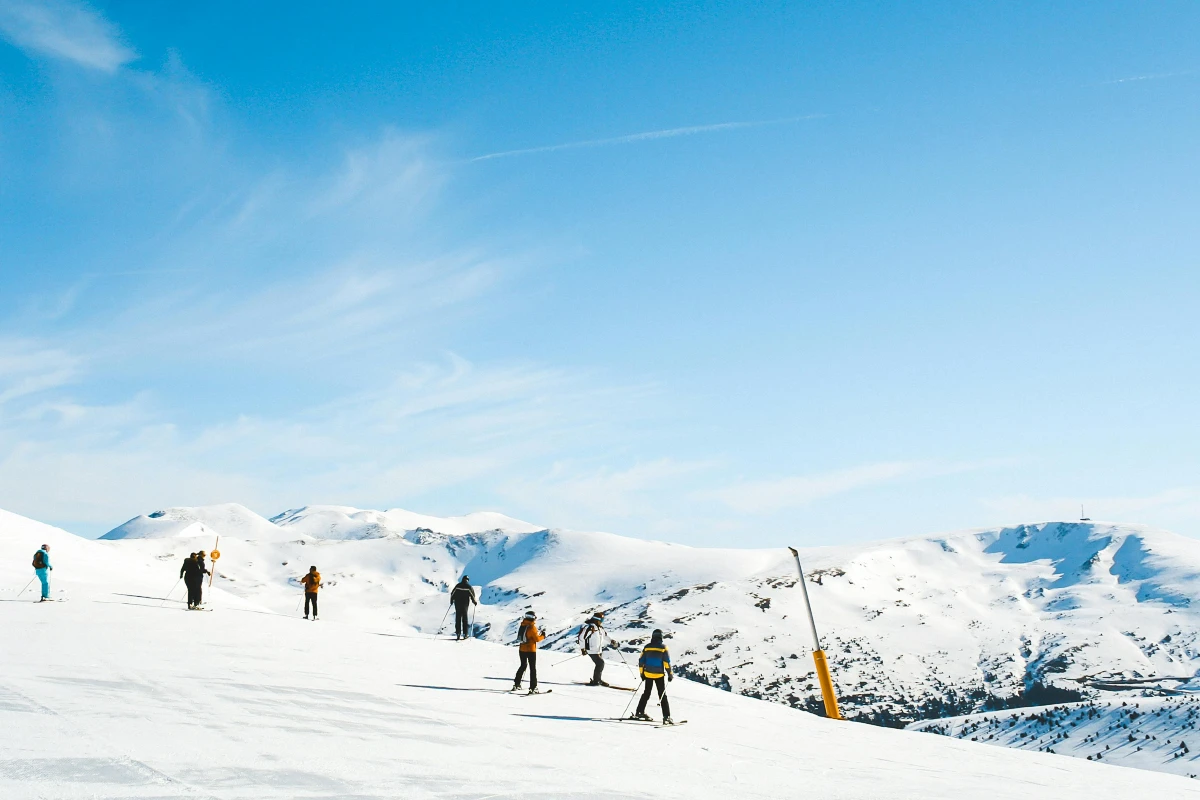
Castle of Saint Barbara in Alicante – Castillo de Santa
The Castle of Santa Bárbara in Alicante, located at the top of Mount Benacantil, is one of the largest medieval…
Author: Karolina Pazik
Where is the lift to St. Barbara’s Castle in Alicante?
The Castle of Santa Bárbara, located on the Benacantil hill, offers visitors the opportunity to take a lift that provides…
Author: Karolina Pazik